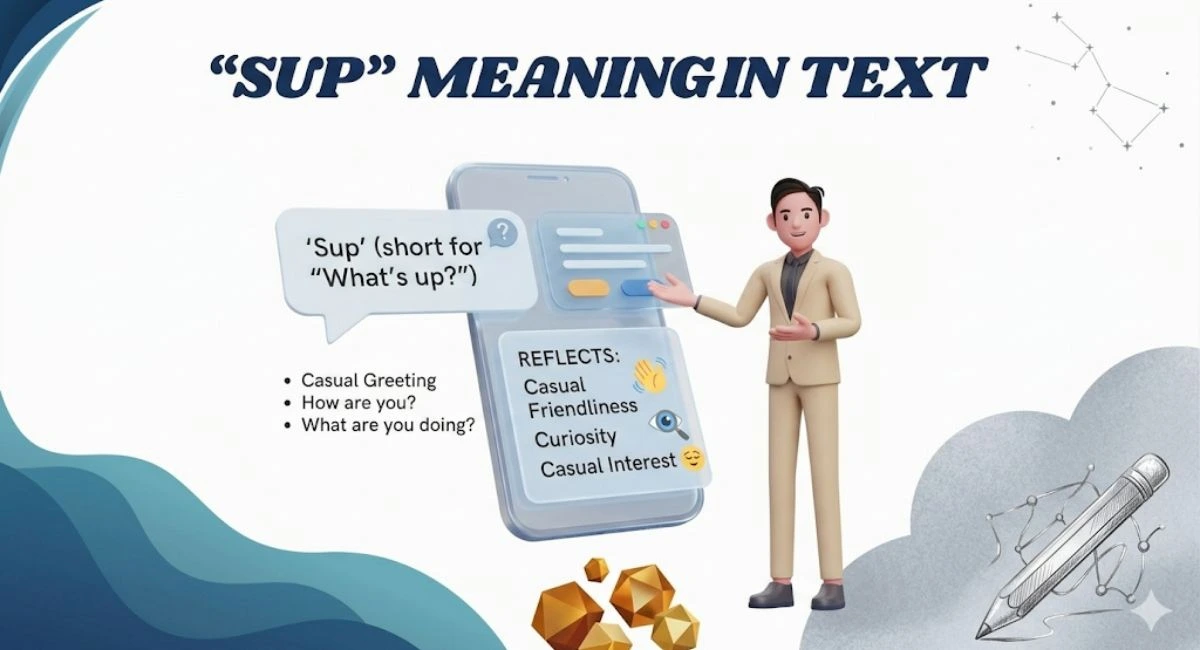
Have you ever received a message that just said “Sup?” and wondered what it means? You are not alone. Sup is one of the most popular pieces of internet slang used in everyday texting and online chats today.
It is a super short way of saying “What’s up?” — which simply means “How are you?” or “What’s going on?” People use it on WhatsApp, Instagram, Snapchat, and TikTok every single day. It is casual, friendly, and quick. Whether you are new to digital communication or just curious about modern slang, this guide will explain everything you need to know about sup — simply and clearly.
What Is the Sup Meaning? Understanding This Casual Greeting
Sup is a short form of “What’s up?” — which itself is a casual greeting that means “How are you?” or “What is happening?” It is one of the most common pieces of internet slang used in everyday digital communication today. When someone sends you “sup,” they are not asking a deep question. They are just saying hello in a relaxed, friendly way.
The word became popular long before the internet. It started as spoken informal communication in American English. Over time, as texting and social media grew, people started shortening “what’s up” to just “sup” to save time and keystrokes. Today, it is everywhere — on WhatsApp, Instagram, Snapchat, TikTok, and in almost every online conversation slang dictionary you can find.
| Full Form | Short Form | Meaning |
| What is up? | Sup | How are you? / What’s happening? |
| What’s up? | Wassup / Wazzup | Same meaning, more emphasis |
| Hey, what’s up? | Hey sup | Friendly hello |
The Sup Full Form and Where It Comes From
The sup full form is simply “What’s up?” — a phrase that has been used in American English since at least the 1980s. Linguists trace casual greeting slang like this back to African American Vernacular English (AAVE), which has given the English language many of its most popular informal expressions. “What’s up?” entered mainstream pop culture through music, films, and television. Then the internet turned it into the ultra-short “sup.”
The reason “sup” spread so fast is simple. Text message abbreviations save time. When you are typing on a small phone keyboard, every letter counts. “Sup” does the job of nine characters in just three. That is the magic of chat slang words — they are efficient. They carry full meaning with almost no effort. This is why Gen Z slang and internet slang abbreviations like sup have become so deeply embedded in everyday conversation.
How “Sup” Is Used in Texting and Online Conversations
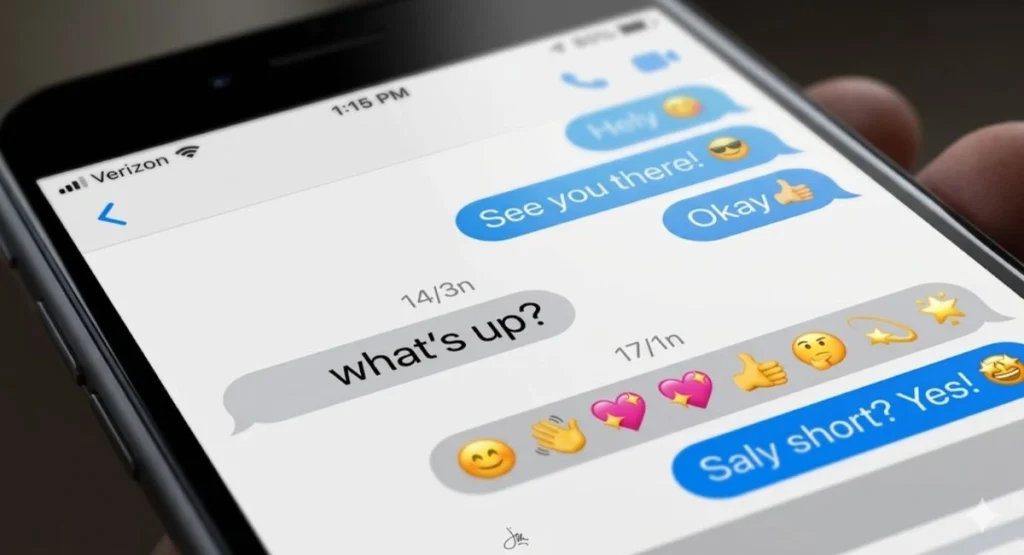
In texting, “sup” almost always works as a conversation starter. It is the digital version of walking up to a friend and nodding. You send “sup,” and you are opening a door. The other person knows you are free to chat, that you are thinking of them, or that you just want to connect. It is low-effort and low-pressure — which is exactly why it works so well in DM slang culture.
On platforms like Instagram and Snapchat, people slide into someone’s DMs with just “sup” all the time. On TikTok, comment sections are full of it. It signals a chill, friendly vibe. The tone and context of “sup” almost always stay positive and relaxed. You would not normally use “sup” in an angry or serious conversation — it is inherently light.
Common ways “sup” appears in texts:
- As a standalone message: “Sup?”
- Combined with a name: “Sup, Ali?”
- As a reply to someone checking in: “Nothing much, sup with you?”
- With an emoji for extra casualness: “Sup 😂”
- In a group chat to get everyone’s attention: “Sup guys”
What Does Sup Mean in Urdu? Sup Meaning for Non-Native Speakers
For non-native English speakers, especially those from Pakistan, India, or other South Asian countries, understanding sup meaning in Urdu or local language context helps a lot. The closest translation of “sup” in Urdu is “کیا چل رہا ہے” — which is kya chal raha hai in English script. This phrase means “What is going on?” or “What’s happening?” — exactly what “sup” means in English.
When a foreign friend or colleague texts you “sup,” do not overthink it. They are not being rude or too casual. In digital communication, this is completely normal. The sup meaning in English is simply a warm, friendly hello. Understanding this helps non-native speakers feel more comfortable in online conversation slang environments, especially on global platforms where English internet slang dominates.
“Language is not just words. It is culture, rhythm, and connection. Slang like ‘sup’ shows how language lives and breathes in real time.” — Linguist David Crystal
How to Reply to Sup: Practical Examples
Knowing what “sup” means is one thing. Knowing how to reply to sup is where people sometimes get stuck. The good news is that replying is very simple. Because “sup” is so casual, your reply should also be casual. There is no need for a formal or detailed response. Just match the energy.
Here are the most natural replies:
| Someone Says | You Can Reply |
| Sup? | Not much, you? |
| Sup? | All good! Sup with you? |
| Sup? | Hey! Nothing much, just chilling. |
| Sup? | Busy day lol, wbu? |
| Sup? | Sup! 👋 |
You can also reply with another piece of Gen Z slang or chat slang words if you want to keep the tone fun and relaxed. Words like “nm” (nothing much), “wbu” (what about you), or even just “hey” all work perfectly. The key is to keep it light. This is informal communication at its most natural.
Sup on Social Media: Slang vs Formal Language
Sup on social media plays a very specific role. It is a casual greeting that signals you are approachable and relaxed. On platforms built around quick, short communication — like Snapchat, TikTok, and Instagram — “sup” fits perfectly. It takes up almost no space and delivers a full social message. That is the genius of short forms in texting and online spaces.
But here is something important to understand — slang vs formal language is a real distinction that matters. You would never write “Sup” in a work email, a job application, or a formal letter. The word belongs to casual, personal spaces. Digital communication slang like “sup” has its own rules. You use it with friends, peers, and people your own age. You switch to formal English when the situation calls for it. Understanding when to use which register is a key part of modern English fluency.
Gen Z Slang and the Rise of Internet Abbreviations
Gen Z slang has taken internet slang abbreviations to a whole new level. While older generations used “brb” (be right back) or “lol” (laugh out loud), Gen Z has built an entire vocabulary of short, expressive, and often ironic words and phrases. “Sup” fits right into this world — it is short, it is friendly, and it has been around long enough to feel timeless.
Popular internet slang words used alongside “sup”:
- NGL — Not gonna lie
- TBH — To be honest
- IRL — In real life
- IYKYK — If you know, you know
- WYD — What you doing
- HMU — Hit me up
- LMK — Let me know
- SMH — Shaking my head
All of these words follow the same logic as “sup” — they compress full thoughts into tiny packages. Text message abbreviations like these are not lazy. They are actually a sophisticated code that fluent speakers use to communicate quickly and expressively. Knowing them makes you a more confident digital communicator.
Case Study: How “Sup” Travels Across Platforms
To understand how sup in texting has spread, look at how it behaves differently on different platforms.
Case Study 1 — WhatsApp: On WhatsApp, “sup” is commonly used between close friends and family members who share a casual relationship. It often starts a conversation that leads somewhere — making plans, sharing news, or just checking in. Because WhatsApp conversations are private, “sup” here feels personal and warm.
Case Study 2 — Instagram DMs: On Instagram, “sup” in a DM often signals romantic interest or a desire to reconnect. It is a very common opener in DM slang culture. Many people use it to break the ice without committing to a longer message. DM slang meaning in this context is almost always friendly, sometimes flirtatious, but rarely aggressive.
Case Study 3 — Snapchat: On Snapchat, where messages disappear, “sup” is one of the most sent messages daily. The platform’s casual, ephemeral nature makes short casual greeting slang like “sup” a perfect fit. It is spontaneous, pressure-free, and very on-brand for the platform.
Case Study 4 — TikTok Comments: On TikTok, “sup” appears in comment sections, often as a way to get the creator’s attention or to greet other commenters. In this public context, online conversation slang like “sup” signals that you are part of the culture — relaxed, fun, and digitally fluent.
Sup Meaning in Different Tones and Contexts
One of the most interesting things about sup meaning in English is how much tone and context can change it. The word itself is neutral. But how and when you use it can send very different signals. A “sup” sent at 2 AM feels different from one sent at noon. A “sup” from a close friend feels different from one from a stranger.
Here is a quick breakdown of how context changes the feel of “sup”:
| Context | What It Often Signals |
| From a close friend | Just checking in, bored, wants to chat |
| From a crush | Flirting, testing the waters |
| From a colleague | Too casual — might feel unprofessional |
| From a stranger on DMs | Trying to start a conversation |
| In a group chat | Getting everyone’s attention casually |
| Late at night | Might want something specific, or just bored |
This is why tone and context matter so much in digital communication. The same three letters can mean very different things depending on who sends them and when.
Formal vs Informal: Knowing When Not to Use Sup
Understanding formal vs informal language is one of the most important skills in English communication. “Sup” is 100% informal communication. It has no place in professional settings, academic writing, or any formal document. If you use it in the wrong place, it can come across as unprofessional or disrespectful — even if that was not your intention.
Think of it this way. You would not walk into a job interview and say “Sup!” to the interviewer. But you might say it to a coworker you have known for years. The same word, very different reactions. Learning to switch between slang vs formal language depending on the situation is a sign of real language maturity. It shows you understand not just the words, but the culture around them. This is especially important for anyone learning sup meaning in Urdu or any other language context — the slang exists, but so do the rules about when to use it.
Why Slang Like “Sup” Matters in Digital Communication
Digital communication slang is not a sign of poor language skills. In fact, knowing and using slang correctly shows a deep understanding of English culture and social norms. Words like “sup” carry emotional information that formal language cannot always deliver. They signal closeness, comfort, and belonging. They say, “I am relaxed around you. You can be relaxed around me.”
For anyone navigating online conversation slang — whether you are a teenager figuring out Gen Z slang, or an adult learning sup meaning in English for the first time — the takeaway is the same. Language lives in its context. Slang is a living, breathing part of that language. It changes fast, spreads wide, and tells you a lot about the culture that uses it. Sup may be just three letters, but it carries decades of cultural history, social meaning, and human connection inside it.
Quick Reference: Everything About Sup at a Glance
| Topic | Answer |
| Sup full form | What’s up? |
| Sup meaning in English | How are you? / What’s happening? |
| Sup meaning in Urdu | کیا چل رہا ہے (Kya chal raha hai) |
| Used on | WhatsApp, Instagram, Snapchat, TikTok |
| Type of language | Informal / Slang |
| Originated from | American English (AAVE) |
| Best reply | “Not much, you?” / “All good!” |
| When NOT to use | Formal emails, work, academic writing |
| Gen Z slang? | Yes, widely used |
| DM slang? | Yes, very common opener |
Final Thoughts on Sup and Internet Slang
Sup is more than just a word. It is a snapshot of how digital communication has changed the way humans connect. It is fast, friendly, and universally understood by anyone fluent in internet slang. Whether you are reading it for the first time or you have been using it for years, now you know exactly what it means, where it comes from, and how to use it well.
The next time someone texts you “sup,” you will not need to wonder. You will know it is just a friendly wave in text form — a modern, digital version of kya chal raha hai that has traveled across languages, cultures, and continents. And that is a pretty remarkable thing for three small letters to do.

Professional content writer and creator dedicated to delivering high-quality, insightful articles that inform and inspire readers.