
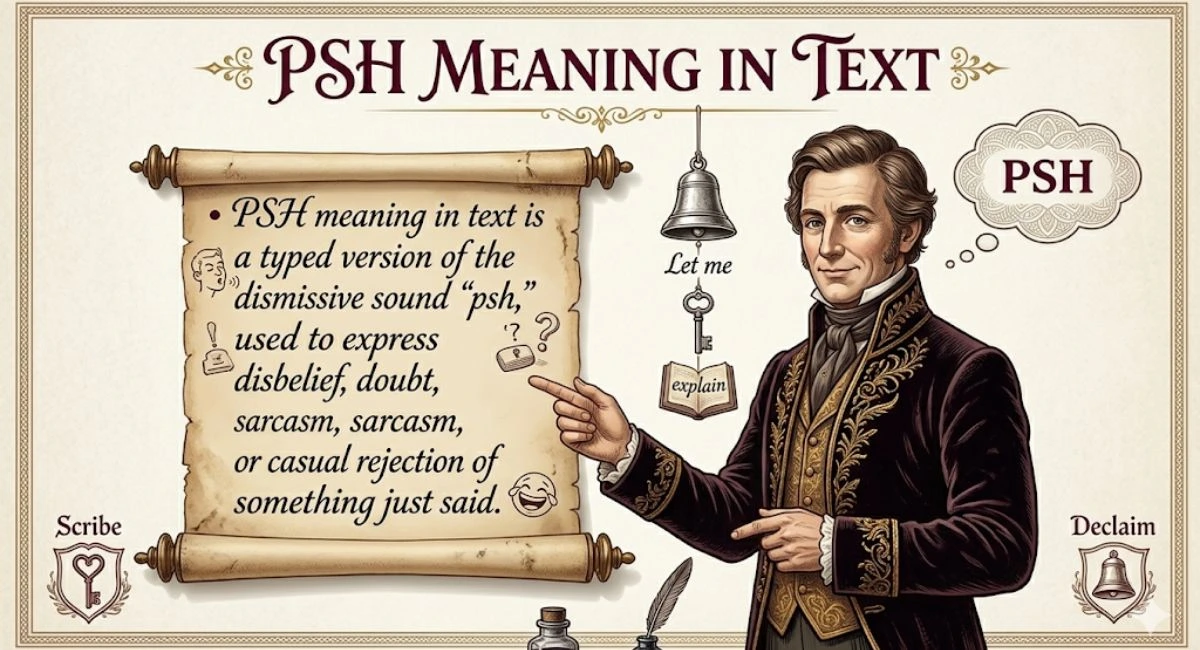
Imagine scrolling through your messages and seeing “PSH” pop up in a reply. You pause. You’re not sure if it’s an insult, a joke, or just a casual reaction. That split-second confusion is exactly why PSH meaning matters. PSH is a sound-based expression that mimics the dismissive scoff humans make in real life. It isn’t a traditional abbreviation with a fixed definition.
Instead, it carries attitude, tone, and personality all in three letters. Whether you spot it in PSH in chat, a TikTok comment, or a WhatsApp thread, its emotional weight stays consistent. This guide breaks down everything you need to know about this popular PSH slang expression and its role across digital communication slang today.
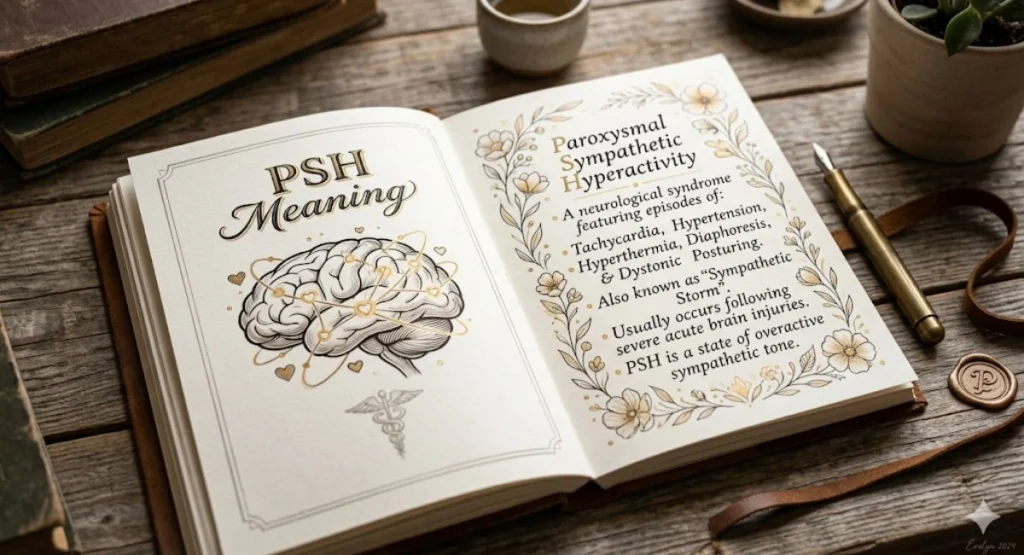
PSH Meaning — What Does Paroxysmal Sympathetic Hyperactivity Actually Mean?
The word “paroxysmal” means sudden and recurring. “Sympathetic” refers to the sympathetic nervous system — your body’s built-in fight-or-flight engine. “Hyperactivity” means that engine is running far beyond normal. Put it all together and Paroxysmal Sympathetic Hyperactivity means your body’s alarm system gets stuck on full blast — repeatedly — without a real threat triggering it. Think of it like a car alarm that goes off every hour with no burglar in sight. It’s loud, disruptive, and exhausting for everyone involved.
Autonomic dysfunction sits at the core of this condition. The sympathetic nervous system loses its balance with the parasympathetic side. The result is explosive, uncontrolled surges of sympathetic output. These surges hit multiple organs at once — heart, lungs, sweat glands, muscles, blood vessels. Patients don’t choose this. Their brain simply can’t stop it. Understanding this mechanism is the first step toward understanding why treatment works the way it does.
PSH Medical Definition According to Current Clinical Guidelines
In 2014, a landmark consensus paper by Baguley et al. gave PSH its first formal definition. According to this definition, PSH is “a syndrome recognized in a subgroup of survivors of severe acquired brain injury, of simultaneous, paroxysmal transient increases in sympathetic activity.” This definition changed everything. Before 2014, clinicians used over thirty different names for the same condition, making research and treatment deeply inconsistent.
The current clinical model describes PSH through the Sympathetic Excitatory State (SES) framework. In simple terms, brain injury damages the pathways that normally suppress sympathetic output. Without those brakes, the system fires uncontrollably. The brain injury recovery process can sometimes — not always — restore those pathways over time. Until then, medication and supportive care become essential tools for managing every episode.
Other Names for PSH (Sympathetic Storms, Dysautonomia, Sympathetic Crisis)
Sympathetic storming, autonomic storming, sympathetic crisis, dysautonomia, and paroxysmal autonomic instability with dystonia (PAID) — these are all names that have been used to describe PSH over the decades. The sheer number of terms reflects a long history of medical confusion. Different hospitals, different countries, and different specialties each developed their own vocabulary for the same clinical picture. Autonomic instability was another popular term in neurology circles throughout the 1990s and early 2000s.
Since the 2014 consensus, “PSH” has become the accepted standard in American clinical settings. Most major medical journals, ICU protocols, and neurology departments in the USA now use this term exclusively. That said, older terms still appear in some hospital records and family communications. If a doctor mentions “storming” or “autonomic crisis,” they’re almost certainly talking about the same condition.
Why the Terminology Confusion Still Matters for Patients and Families
Here’s the real-world problem. A family member types “sympathetic storming” into Google. They find some results. Then they try “autonomic crisis.” More results — but different ones. Then “dysautonomia.” Now they’re reading about a completely separate chronic condition affecting young women. The confusion spirals fast. Delayed diagnosis becomes more likely when families and even junior clinicians don’t know which term to use.
The practical fix is simple. Always use the term “paroxysmal sympathetic hyperactivity” when speaking with your neurologist or intensivist. Ask specifically: “Could this be PSH?” That single question can redirect a diagnostic conversation that might otherwise drift toward sepsis workups or seizure protocols. Terminology isn’t just academic — in this neurological condition, the right word can mean faster diagnosis and faster treatment.
What Causes PSH? Pathophysiology and Brain Conditions That Trigger It
The human brain contains powerful inhibitory circuits. These circuits act like governors on an engine — they keep sympathetic output within safe limits. When a severe brain injury damages or severs these circuits, the governor disappears. Sympathetic signals fire without restraint. This is the core mechanism behind PSH. The traumatic brain injury doesn’t directly cause PSH — it removes the brain’s ability to prevent it. The sympathetic excitatory state then emerges as a consequence of that lost inhibition.
Several specific brain conditions are known to trigger PSH. Traumatic brain injury (TBI) remains the most common cause, accounting for the majority of PSH cases seen in American ICUs. However, hypoxic brain injury — the type caused by cardiac arrest or near-drowning — is also a significant trigger. Stroke, brain tumors, hydrocephalus, and viral encephalitis round out the list. What these conditions share is their capacity to disrupt deep brain structures involved in autonomic regulation.
| Brain Condition | PSH Risk Level | Notes |
|---|---|---|
| Traumatic Brain Injury (TBI) | Very High | Most common cause in USA |
| Hypoxic Brain Injury | High | Post-cardiac arrest patients |
| Hemorrhagic Stroke | Moderate-High | Especially subarachnoid hemorrhage |
| Brain Tumors | Moderate | Depends on tumor location |
| Hydrocephalus | Moderate | Pressure-related disruption |
| Viral Encephalitis | Lower | Less common but documented |
The Role of the Sympathetic Nervous System in PSH Episodes
Your sympathetic nervous system exists to protect you. It accelerates your heart rate during danger. It redirects blood to your muscles. It triggers sweating to cool you down. In a healthy brain, the hypothalamus and brainstem coordinate this response and then shut it off when the threat passes. In PSH, that shutdown mechanism is broken. The fight-or-flight response fires — then keeps firing — long after any threat has passed.
The hypothalamus plays a particularly central role. Injury to hypothalamic pathways disrupts the feedback loop that normally tells the sympathetic system to stand down. Some researchers compare it to a thermostat with a broken off-switch. The system keeps heating the room even when the temperature is already dangerously high. Understanding this helps explain why treatment targets multiple points in the sympathetic chain — because no single drug can fix a broken feedback loop alone.
Risk Factors — Who Is Most Likely to Develop PSH?
Not everyone who suffers a brain injury develops PSH. Research consistently shows that younger patients face higher risk. This is partly because younger people survive more severe TBIs — advances in emergency medicine mean more young patients reach the ICU alive after catastrophic injuries. Diffuse axonal injury (DAI) stands out as the single strongest predictor of PSH. DAI occurs when rapid acceleration-deceleration forces shear the brain’s long nerve fibers — exactly the type of injury seen in high-speed car crashes and falls.
TBI severity at hospital admission also predicts PSH risk significantly. Patients with a Glasgow Coma Scale (GCS) score of 8 or below on arrival face substantially higher risk. Prolonged mechanical ventilation, absence of scheduled sedation breaks, and high baseline sympathetic tone all contribute as well. If your loved one is in the ICU following a severe TBI, ask the care team whether PSH has been considered — especially if episodes of sweating, heart racing, or temperature spikes are occurring.
Does Age or Gender Play a Role in PSH Development?
Data from multiple US trauma centers shows a clear pattern. Males between the ages of 15 and 45 represent the most affected demographic. This aligns closely with TBI demographics in America — young men are disproportionately involved in motor vehicle accidents, falls, and assaults that cause severe brain injury. The gender gap isn’t fully explained by injury rates alone. Some researchers suggest hormonal differences in autonomic regulation may also contribute.
Age matters beyond just survival rates. Younger brains are simultaneously more vulnerable to PSH and more capable of recovery from it. The same neuroplasticity that makes young brains adaptive also makes them more prone to the dysregulated excitatory states that define sympathetic hyperactivity risk. For older patients, PSH is less common but tends to be harder to distinguish from other age-related autonomic conditions.
PSH Symptoms — What Happens During an Episode?
Picture someone sprinting a full marathon — while lying completely still in a hospital bed. That’s what a PSH episode looks like from the inside. The classic symptom cluster includes tachycardia (heart rate above 130 bpm), hypertension, tachypnea (rapid breathing), diaphoresis (profuse sweating), hyperthermia (high body temperature without infection), and dystonic posturing (abnormal muscle stiffening). These sympathetic storming symptoms don’t always appear together, and their intensity varies from episode to episode.
Autonomic dysregulation drives every one of these symptoms simultaneously. The heart races because sympathetic signals flood cardiac tissue. Blood pressure surges because peripheral vessels constrict. Sweating erupts because eccrine glands activate. Body temperature climbs because metabolic rate spikes. Muscles stiffen because motor pathways caught in the sympathetic surge lose normal inhibition. Witnessing this in a loved one is terrifying. Understanding what’s happening — that it’s neurological, not infectious — is critical for families and nursing staff alike.
| PSH Symptom | Normal Range | PSH Episode Range |
|---|---|---|
| Heart Rate | 60–100 bpm | 130–180+ bpm |
| Blood Pressure | 120/80 mmHg | 180/100+ mmHg |
| Temperature | 98.6°F (37°C) | 101–104°F+ |
| Respiratory Rate | 12–20 breaths/min | 30–40+ breaths/min |
| Sweating | Minimal at rest | Profuse, drenching |
| Muscle Tone | Normal | Rigid, posturing |
PSH Symptom Checklist — A Quick Reference for Caregivers
Every caregiver watching over a PSH patient needs a clear mental checklist. When you see sudden heart rate spikes above 130 beats per minute, profuse sweating with no fever source, rapid breathing without respiratory infection, high temperature with negative cultures, blood pressure surging without prior hypertension history, or abnormal muscle rigidity — report it immediately. These signs together form the unmistakable fingerprint of a PSH caregiver guide moment. Don’t wait. Don’t second-guess. Alert nursing staff the moment two or more of these signs appear simultaneously.
Recognizing episodes early makes a measurable difference in patient outcomes. Research shows that faster intervention during PSH episodes reduces secondary brain injury caused by prolonged sympathetic surges. Families who understand what to watch for become an extension of the clinical care team. Your eyes and your instincts matter enormously in this condition — especially during the overnight hours when staffing ratios are lower and episodes can go unnoticed longer.
How Long Do PSH Episodes Last? Chronicity and Patterns
Individual PSH episodes are unpredictable in duration. Some last three to five minutes. Others stretch beyond an hour. In the acute phase of recovery — typically the first two to four weeks after brain injury — episodes may occur multiple times daily. PSH episode duration varies not just between patients but within the same patient across different days. One morning might bring three short episodes. The next might bring one prolonged, medically challenging storm.
Paroxysmal episodes tend to cluster during periods of increased stimulation or medical intervention. Nursing care activities — repositioning, suctioning, dressing changes — frequently trigger episodes in vulnerable patients. The frequency and severity of episodes typically decrease as the brain begins to recover. Most patients see meaningful reduction in PSH activity within four to eight weeks of injury onset. However, some patients experience persistent episodes well into their rehabilitation phase.
What Triggers Individual PSH Episodes in Hospitalized Patients?
Even a blood pressure cuff inflating can set off a full PSH episode in a sensitized patient. That’s how dramatically the threshold drops. Common PSH triggers in the hospital include endotracheal suctioning, physical repositioning, loud sudden noises, bright overhead lighting, painful procedures, emotional distress in the room, and even the vibration of a nearby ventilator alarm. Sensory stimulation of almost any kind can tip a vulnerable patient into a full sympathetic surge.
For nurses and caregivers, this knowledge is operationally critical. Clustering care activities — bathing, turning, and suctioning within the same brief window rather than spreading them across the day — minimizes the total number of stimulation events. Keeping the room dim, quiet, and calm between care episodes creates a lower-stimulation environment that reduces baseline sympathetic tone. Small environmental changes translate directly into fewer PSH episodes and better patient comfort.
How Is PSH Diagnosed? Criteria, Tests and Differential Diagnosis
There is no blood test, imaging study, or EEG pattern that definitively diagnoses PSH. Diagnosis is entirely clinical — built on pattern recognition, careful observation, and the systematic exclusion of other conditions. The PSH diagnosis criteria require clinicians to identify recurring episodes of simultaneous sympathetic activation across multiple organ systems in the context of a known brain injury. The clinical assessment must document at least three of the six core features — tachycardia, hypertension, tachypnea, diaphoresis, hyperthermia, and posturing — occurring together during episodes.
The PSH-Assessment Measure (PSH-AM) tool has become the gold standard for formal diagnosis in US clinical settings. Developed alongside the 2014 consensus definition, PSH-AM combines two components: the Clinical Feature Scale (CFS), which quantifies symptom severity during episodes, and the Diagnosis Likelihood Tool (DLT), which scores clinical context. A combined score above the validated threshold establishes a probable PSH diagnosis. This tool reduces misdiagnosis significantly and helps justify targeted treatment protocols.
| Condition | Key Distinguishing Feature | Test Used |
|---|---|---|
| Seizures | EEG abnormalities present | Electroencephalogram |
| Sepsis | Positive cultures, identifiable infection source | Blood/urine cultures |
| Neuroleptic Malignant Syndrome | Medication-induced, rigidity dominant | Medication history |
| Pulmonary Embolism | Respiratory distress primary | CT pulmonary angiogram |
| Pheochromocytoma | Adrenal tumor present | Urine catecholamines |
| Thyroid Storm | Thyroid function severely abnormal | TSH, T3, T4 levels |
The PSH-AM Score — How Clinicians Measure Severity
The PSH-AM score works like a structured checklist with weighted values. Clinicians assess each core symptom during a documented episode and assign severity scores. They also evaluate clinical context — the type of brain injury, the timing relative to injury onset, and whether episodes are recurring. The PSH-AM score total guides both diagnosis and treatment intensity. Higher scores indicate more severe, more certain PSH and typically justify more aggressive pharmacological intervention.
For families, the PSH-AM tool offers an important reassurance. It means your loved one’s diagnosis isn’t guesswork. It’s structured, reproducible, and tied to validated research. The severity assessment process also creates a baseline — allowing clinicians to track whether treatment is working over days and weeks. If scores decrease over time, treatment is effective. If they plateau or worsen, the medication regimen needs adjustment. This is precision medicine applied to one of neurology’s most challenging syndromes.
PSH Treatment — Abortive Therapy (Opioids, Propofol, Benzodiazepines)
PSH abortive therapy means stopping an episode that is already happening. Think of it like hitting an emergency brake during a runaway train moment. The three primary agents used in American ICUs are opioids — particularly intravenous morphine — propofol, and benzodiazepines. Each targets a different aspect of the sympathetic surge. Sympathetic storming treatment in the acute phase demands fast action, because prolonged episodes cause secondary brain injury, cardiovascular stress, and dangerous hyperthermia.
Morphine works by suppressing sympathetic outflow at multiple levels of the central nervous system. It’s fast-acting, titratable, and highly effective during acute episodes. Propofol provides rapid sedation and reduces central sympathetic tone — particularly useful when episodes are prolonged or when the patient is mechanically ventilated. Benzodiazepines reduce agitation and muscle hyperactivity, addressing the motor component of the storm. Clinicians often combine agents depending on which symptoms dominate the episode.
| Abortive Agent | Mechanism | Onset Speed | Best Used For |
|---|---|---|---|
| Morphine (IV) | Suppresses sympathetic outflow | 5–10 minutes | Heart rate, BP, sweating surges |
| Propofol (IV) | Central sedation | 1–3 minutes | Prolonged severe episodes |
| Lorazepam (IV) | GABAergic sedation | 5–10 minutes | Agitation, muscle rigidity |
| Midazolam (IV) | GABAergic sedation | 2–5 minutes | Rapid muscle control |
Why Opioids Are a First-Line Choice for Acute PSH Episodes
Morphine PSH treatment works because opioid receptors are distributed throughout the sympathetic nervous system — not just in pain pathways. When morphine binds these receptors, it reduces the electrical storm driving the PSH episode from multiple angles simultaneously. This opioid sympathetic suppression effect is distinct from simple pain relief. Even patients who appear unresponsive to pain benefit from morphine during PSH episodes because the drug targets the autonomic system directly.
Clinicians use morphine carefully. The goal is the lowest effective dose that terminates the episode without causing respiratory depression or hemodynamic compromise. In ventilated patients, the safety margin is wider. In spontaneously breathing patients, close monitoring is essential. One clinical tip worth noting: morphine given at the very start of an episode — before symptoms peak — is significantly more effective than morphine given after the surge is already at maximum intensity. Early intervention is everything.
Preventative Therapy and Long-Term Management of PSH
Propranolol PSH treatment represents the cornerstone of preventative therapy. This beta-blocker reduces the cardiovascular impact of sympathetic surges — blunting the heart rate and blood pressure spikes that define each episode. But propranolol alone rarely controls PSH completely. Long-term PSH management requires a multimodal approach — layering medications that target different parts of the sympathetic system simultaneously. It’s less about finding a cure and more about turning down the volume on a system that refuses to stay quiet.
The five medications most commonly used in preventative PSH protocols in the USA are propranolol, clonidine, bromocriptine, gabapentin, and intrathecal baclofen. Each addresses a different physiological target. Propranolol blocks peripheral beta receptors. Clonidine acts centrally to reduce sympathetic outflow from the brain. Gabapentin modulates calcium channels involved in central excitability. Bromocriptine targets dopaminergic pathways dysregulated by brain injury. Baclofen — particularly when delivered intrathecally — reduces spasticity and sympathetic muscle activation simultaneously.
| Preventative Drug | Drug Class | Primary Target | Key Benefit |
|---|---|---|---|
| Propranolol | Beta-blocker | Heart rate, BP | Reduces cardiovascular surges |
| Clonidine | Alpha-2 agonist | Central sympatholytic | Lowers baseline sympathetic tone |
| Gabapentin | Calcium channel modulator | Central excitability | Reduces episode frequency |
| Bromocriptine | Dopamine agonist | Dopaminergic pathways | Targets neurological dysregulation |
| Baclofen (intrathecal) | GABA-B agonist | Spasticity, motor surges | Controls muscle component |
Bromocriptine and Gabapentin — The Underrated PSH Medications
Bromocriptine PSH therapy remains underused in many American hospitals despite strong supporting evidence. Brain injury disrupts dopaminergic signaling significantly — and bromocriptine directly restores some of that signaling. Patients who don’t respond adequately to beta-blockers alone often show dramatic improvement when bromocriptine is added to the regimen. They’re quiet workhorses. Underused. Highly effective. Gabapentin autonomic storming treatment works differently — it reduces the central sensitization that makes the brain hypersensitive to any incoming stimulus.
Together, bromocriptine and gabapentin address the neurological root causes of PSH rather than just blunting its cardiovascular consequences. This makes them particularly valuable in patients with persistent high-frequency episodes despite adequate propranolol dosing. Rehabilitation physicians and neurologists in USA academic medical centers are increasingly incorporating both agents into standard PSH protocols. If your loved one’s episodes aren’t responding to first-line treatment, ask specifically about whether bromocriptine and gabapentin have been considered.
PSH in ICU and Critical Care — What Clinicians Need to Know
ICU sympathetic storming is frequently the first place PSH reveals itself — and frequently the last place it gets correctly identified. The chaotic environment of a busy ICU creates perfect conditions for PSH to hide. Tachycardia gets attributed to pain or agitation. Fever triggers sepsis workups. Sweating gets dismissed as room temperature. Hypertension gets treated with antihypertensives rather than recognized as part of a sympathetic surge pattern. Missing PSH in the ICU isn’t just a diagnostic error — it’s a treatment delay that directly harms the patient.
Critical care PSH recognition depends on pattern thinking rather than individual symptom management. When multiple autonomic abnormalities cluster together — repeatedly, in a brain-injured patient — PSH must enter the differential immediately. Early identification allows targeted treatment to begin before secondary injury accumulates. Studies show that patients with recognized and treated PSH have better neurological outcomes, shorter ICU stays, and lower rates of complications than those whose PSH goes unrecognized.
ICU Nursing Protocol for PSH — Monitoring and Early Response
Nurses are the frontline defenders against unrecognized PSH. Vital sign thresholds worth flagging immediately include heart rate above 130 bpm without arrhythmia, systolic blood pressure above 160 mmHg without prior hypertension, temperature above 101°F without infection source, and respiratory rate above 30 breaths per minute without pulmonary cause. Autonomic monitoring in PSH-risk patients should be continuous, with documentation noting episode timing, duration, potential triggers, and resolution pattern.
A practical tool gaining traction in ICU nursing PSH protocol development is the bedside episode log. Each episode gets documented with time of onset, vital sign peaks, suspected trigger, intervention used, and time to resolution. Over days, these logs reveal patterns — specific care activities that consistently trigger episodes, times of day when episodes cluster, and medication doses that most reliably terminate surges. That data becomes invaluable for the multidisciplinary team adjusting the treatment plan.
Supportive Care and Avoiding PSH Triggers
Your patient’s environment is either their greatest ally or their most persistent enemy. PSH supportive care begins with environmental modification — and it costs nothing. Dim the room lighting. Reduce ambient noise to the lowest practical level. Close the door during rest periods. Ask visitors to speak softly and move slowly. These aren’t small comforts — they’re active medical interventions that reduce the frequency and severity of sympathetic episodes. Trigger avoidance is as therapeutically important as any medication on the PSH drug list.
Care clustering is one of the most powerful and underutilized strategies in PSH management. Rather than performing repositioning, oral care, dressing changes, and suctioning at separate intervals across the day — each one potentially triggering an episode — experienced ICU nurses batch these activities into a single window. One stimulation event. One potential episode. Then a long period of undisturbed rest for the nervous system to recover. Families should understand this logic so they don’t inadvertently disrupt the schedule with well-meaning visits during planned rest periods.
Family and Caregiver Guide — How to Help During a PSH Episode
When an episode begins, the most important thing you can do is stay calm. Panic is contagious — even to patients who appear unresponsive. Alert nursing staff immediately without creating sudden loud noise in doing so. Dim any lights you can control. Step back from the bedside to avoid adding tactile stimulation. Speak in a low, steady voice if you speak at all. Do not rub the patient’s arms or legs — even gentle touch can worsen a PSH caregiver response situation during an active episode.
After the episode resolves, document what you observed. What were you doing just before it started? Was the TV on? Did someone enter the room suddenly? Was a procedure just completed? This information, shared with the nursing team, builds the trigger profile that helps prevent the next episode. Families who engage actively in this documentation process become genuinely therapeutic partners — not just worried bystanders.
PSH Full Form in Different Contexts — Medical, Physics, Aviation and More
PSH full form means something very different depending on where you encounter it. In medicine, PSH stands for Paroxysmal Sympathetic Hyperactivity — a serious neurological condition affecting brain-injured patients. In texting and social media, PSH abbreviation functions as a sound-based expression of dismissal or sarcasm. In aviation, PSH refers to Pressure Sensitive Housing. In physics, it appears in Phase Shift Harmonic contexts. The same three letters carry completely different weight depending on the field using them.
| Field | PSH Full Form | Context |
|---|---|---|
| Medicine | Paroxysmal Sympathetic Hyperactivity | Brain injury, ICU care |
| Texting/Slang | Dismissive expression | PSH meaning in text, social media |
| Aviation | Pressure Sensitive Housing | Aircraft systems |
| Physics | Phase Shift Harmonic | Signal processing |
| Informal Chat | Sarcasm/attitude marker | PSH in chat, messaging apps |
This matters practically for patients and families. Someone searching for PSH meaning in text or PSH slang expression will land on completely different content than someone searching for PSH medical treatment. If you’re researching a medical situation, always pair your search with terms like “brain injury,” “ICU,” or “neurological” to filter out the slang results. PSH in online conversation has a life entirely separate from its clinical meaning — and confusing the two wastes valuable research time.
PSH in Everyday Slang — What It Means in Texting and Social Media
What does PSH mean when your teenager types it? It’s a PSH sound-based expression — mimicking the dismissive scoffing sound humans make in real life when they don’t believe something or want to brush it off lightly. PSH meaning explained in social media terms is essentially “yeah right,” “whatever,” or “I’m not impressed.” It’s one of those expressive slang terms that carries more attitude than information. How is PSH used in texting — someone says something bold, and the reply comes back: “PSH, you wish.”
PSH sarcasm or dismissal is its primary emotional register. Is PSH rude in chat? It can be, depending on delivery — but most of the time it’s playful. PSH stand for in Snapchat and PSH on Instagram is the same expression, just delivered in different visual contexts. PSH on TikTok comments often pair with eye-roll emojis for maximum attitude. PSH in WhatsApp conversations tends to be warmer and more friend-specific. PSH meaning in Urdu carries a similar dismissive scoff quality — the PSH Urdu English translation maps loosely to “ہاں، بالکل نہیں” (yeah, absolutely not). Understanding casual vs formal slang use helps — PSH vs formal language is a non-contest. PSH belongs entirely to informal online language, digital communication slang, and reaction words in texting. You won’t find it in a business email. You’ll find it in every group chat. PSH playful tone in messages makes it a staple of friendly banter. PSH in social media comments adds personality without effort. PSH disbelief reaction and PSH humor in TikTok replies reflect how naturally internet slang terms like this embed themselves into daily casual dismissal in texting culture. PSH attitude expression says everything in three letters — and that efficiency is exactly why it endures.
Frequently Asked Questions About PSH
Q: What does PSH mean in a text message? PSH is used in texting to express dismissal, disbelief, or sarcasm, similar to saying “yeah right” or “whatever.”
Q: What is PSH short for? PSH is short for an expression of scorn or doubt, often used to brush off something as unimportant or unbelievable.
Q: What does PHS stand for in texting? PHS is not widely recognized in texting slang, but it is sometimes confused with PSH, which expresses dismissal or disbelief.
Q: What does it mean when someone goes PSH? When someone says PSH, they are typically expressing that they find something unimpressive, unbelievable, or not worth taking seriously.
Q: What does the slang PHT mean? PHT is a slang term that stands for “Putting Hubby Through,” often used humorously to describe a spouse supporting their partner through education or career goals.
| FAQ | Short Answer |
|---|---|
| Can PSH be cured? | No cure — managed and often resolves with brain recovery |
| Is it life-threatening? | Yes, if untreated — manageable with proper care |
| How common after TBI? | 8–33% of severe TBI survivors |
| Does it resolve naturally? | Often yes — over weeks to months |
| Which specialist treats it? | Neurologist, intensivist, rehab physician |
| Same as dysautonomia? | Related but not identical |
Conclusion — What You Should Take Away About PSH
Paroxysmal sympathetic hyperactivity is not rare. It’s underrecognized. That distinction matters enormously. Every day in American ICUs, patients experience undiagnosed PSH episodes while clinical teams chase other explanations. Every day, families watch their loved ones sweat, stiffen, and surge — without understanding why. PSH recognition starts with awareness — and awareness starts with guides exactly like this one. The knowledge you’ve gained here has real clinical value, whether you’re a nurse, a family member, or a medical student encountering this condition for the first time.
The road forward is clearer now. If you suspect PSH in a loved one, use the right terminology with the medical team. Ask about the PSH-AM score. Ask whether preventative medications have been optimized. Ask about environmental trigger reduction. Push for a neurology consult if one hasn’t happened. And share this guide with everyone involved in the patient’s care — because paroxysmal sympathetic hyperactivity awareness is still far too low in non-specialist settings. Knowledge is the first step. Action is the second. You now have both.

Professional content writer and creator dedicated to delivering high-quality, insightful articles that inform and inspire readers.